
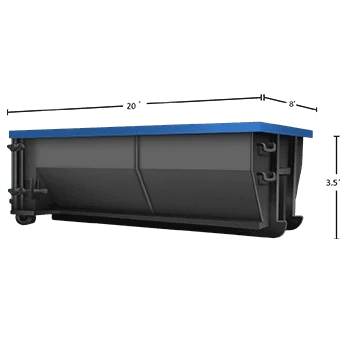
Describe the vehicle's approach to the proposed position
Give the provider the actual entrance and explain gates, turns, surface conditions, overhead obstacles and other activity along the approach. Ask for the dimensions and working clearance of the offered container and handling arrangement. Do not apply a generic measurement to a different vehicle or model.
Separate the container's resting position from the area needed during delivery and collection. Check who controls both areas and which permissions apply. A position that uses adjoining land or temporarily blocks an entrance needs explicit review; the rental request cannot grant that permission.
Keep the loading arrangement within the agreed limits
Confirm the accepted contents, applicable weight limit and the provider's fill instructions before work starts. Do not let loose material project beyond the permitted loading boundary or treat unused volume as evidence that a dense load is acceptable. Ask how uncertain items should be handled before adding them.
Where the offered model has an opening used for loading, keep the needed operating space available. Follow the provider's instructions and keep people away from vehicle handling work. The site's loading contact should be able to stop an unsuitable addition and communicate a change in the waste stream.
Decide whether the next visit is an exchange or the end
An exchange requests removal of one load and another container arrangement so work can continue. Final pickup ends that equipment's presence. Tell the provider which outcome you need; do not assume that requesting removal also books a replacement or that a second container is available immediately.
Explain whether work can pause between those stages and what placement area will remain available. Ask how each proposed visit and load is priced within the written terms. A change in material for the next load needs its own acceptance discussion, even if the location and customer remain the same.
Protect the recovery route from other site changes
Before the planned visit, check that parked vehicles, stored materials and new work have not occupied the agreed approach or handling space. Report any changed ground condition or obstruction. Do not attempt to reposition a loaded container yourself to recover a route that has been lost.
On a site with portable toilets, keep restroom servicing access separate from container loading and collection activity. Coordinate the visit plans without assuming the same vehicle or crew handles both. At final pickup, confirm that no further loading is expected and that an authorized contact can address an access problem.
Questions before you book
How much space does a roll-off need?
Ask the provider about the specific container, vehicle approach and handling clearance. The resting footprint alone is not the whole working area.
Is an exchange the same as final pickup?
No. An exchange includes a request for a continuing container arrangement; final pickup removes the equipment without assuming a replacement. Agree the desired sequence explicitly.
Can a roll-off block the toilet servicing route?
Keep both service routes workable. Explain the combined site layout to the providers rather than discovering at the next visit that one operation obstructs the other.